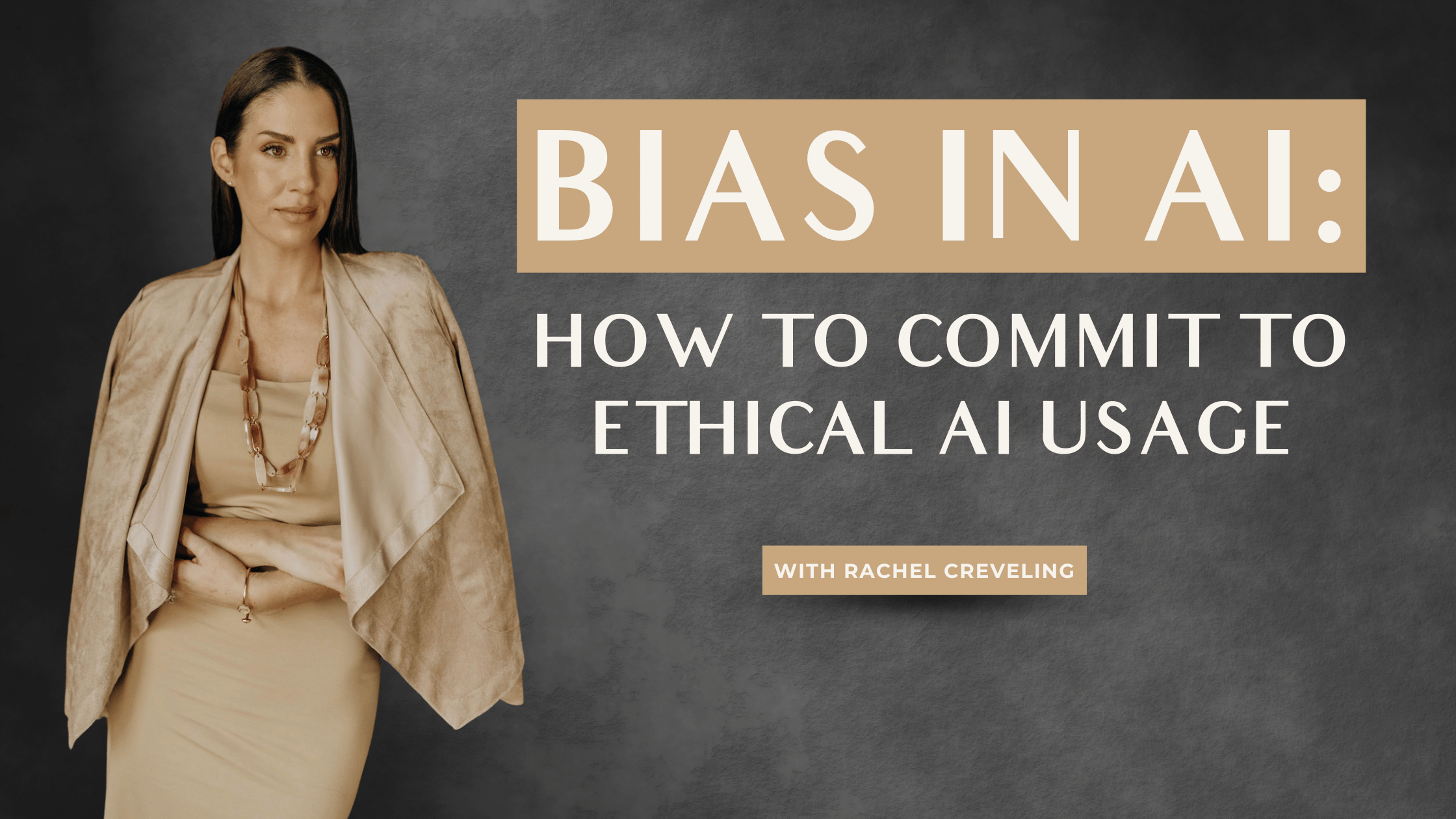
AI Ethics: What is Bias in AI?
(Originally published in June, Updated 8/23/24)
Artificial Intelligence (AI) has rapidly evolved from a futuristic idea to an everyday tool. As of today, it has zero formal developmental oversight – ethically and otherwise.
So as we enter the back half of 2024 – a year that will surely go down in history as “when AI went mainstream” – we’re talking about ethical AI usage.
Without a doubt AI is transforming industries and streamlining the decision-making process for the better. On the personal side, it’s redefining convenience in everyday life.
It has to be said: yes, some people will use it with ill intent. Knowing that the bulk of us will be using it simply as “part of everyday life”, it’s important to recognize that as intelligent as these systems may be, they are not immune to bias.
Therefore it must be something we actively work to overcome as the technology gets more robust.
What is Bias in AI?
At its core, AI bias refers to the systematic error that can occur in algorithmic outputs, leading to unfair or prejudiced results against certain individuals or groups.
A good example might be when a chef favors savory dishes over sweet ones. It’s her right to have that bias but in the case of AI, objectivity is essential.
Because tools like Siri, Alexa and ChatGPT are answering a lot of our day-to-day questions, it’s easy to envision how biased answers would create consequences.
With such high stakes, understanding the types of bias we’re seeing with this tech will help you practice ethical AI usage.
Watch my YouTube video about AI Ethics here!
AI Ethics: What Types of Bias Should I Look Out For?
Bias in AI can manifest in various forms — from gender discrimination in job recruitment tools to racial bias in facial recognition software.
Such biases typically stem from one of two sources:
- Data Bias: When the historical data fed into the machine learning model is skewed or unrepresentative.
- Algorithmic Bias: When the algorithms themselves process data in a way that reinforces existing prejudices.
Think of it this way: when you Google something and get hundreds of responses, it’s your job to sift through a few sources and determine the validity of any given response.
Taking the AI’s responses at face value runs the risk of utilizing information that may not be true, and may certainly be biased.
How to Commit to Ethical AI Usage
We know developers have a responsibility to incorporate diverse data. We expect legislation and forthcoming regulation that will require transparency in developer algorithms and variable decision making processes.
Here are a few ways:
Regular Fact Checks
- Put simply: audit your responses. There are so many free AI tools out there, and they’re all different.
- Use a few and see how the different responses resonate with you. If you know what to look for, it’s not hard to detect biased or inaccurate responses.
- I expect that the developers will also be charged with formal audits that will inevitably be comprehensive and continuous.
Ethical Training
- You heard it here first – I think we’re about to see a new job created in the coming months along the lines of an AI Ethicist.
- I anticipate most companies will need to hire someone exclusively dedicated to training employees how to use AI ethically. Continuing education on ethics has always been important to HR, and I think this role is inevitable.
- I expect schools will have to incorporate AI ethics guidelines (that may come from Federal oversight eventually) but for profit secondary schools will likely have an AI Ethicist overseeing student use and teaching, if they don’t already.
Information Sharing
- As with any “new frontier” those leading the charge help the masses by sharing their experiences. All of us documenting our experiences with AI are essentially creating a record of the positives and negatives we find along the way.
- We’re an informal group that inherently brings a diverse perspective to the table.
- Hopefully developers and legislators review the experiences of the users to help further reduce inadvertent biases.
Conclusion
The possibility of truly unbiased AI is not realistic. Rather it’s the users who must be aware of these flaws. Ethical AI usage is absolutely possible (and hopefully becomes the norm). As we users take steps to recognize and reduce any bias we see in these tools, we help create a more equitable digital future.
I know this is a hot topic and I’d love to hear your take. Reach out any time: rachel@bellestrategies.com.

With nearly two decades in the industry, Belle Strategies’ Owner Rachel Creveling is a seasoned business consultant who specializes in comprehensive company growth. By integrating strategic support and workflow optimizations across operations, marketing, sales, IT and HR, she creates custom solutions to position clients for optimal results. She excels at incorporating trending tech and studied Strategies for Accountable AI at Wharton.